

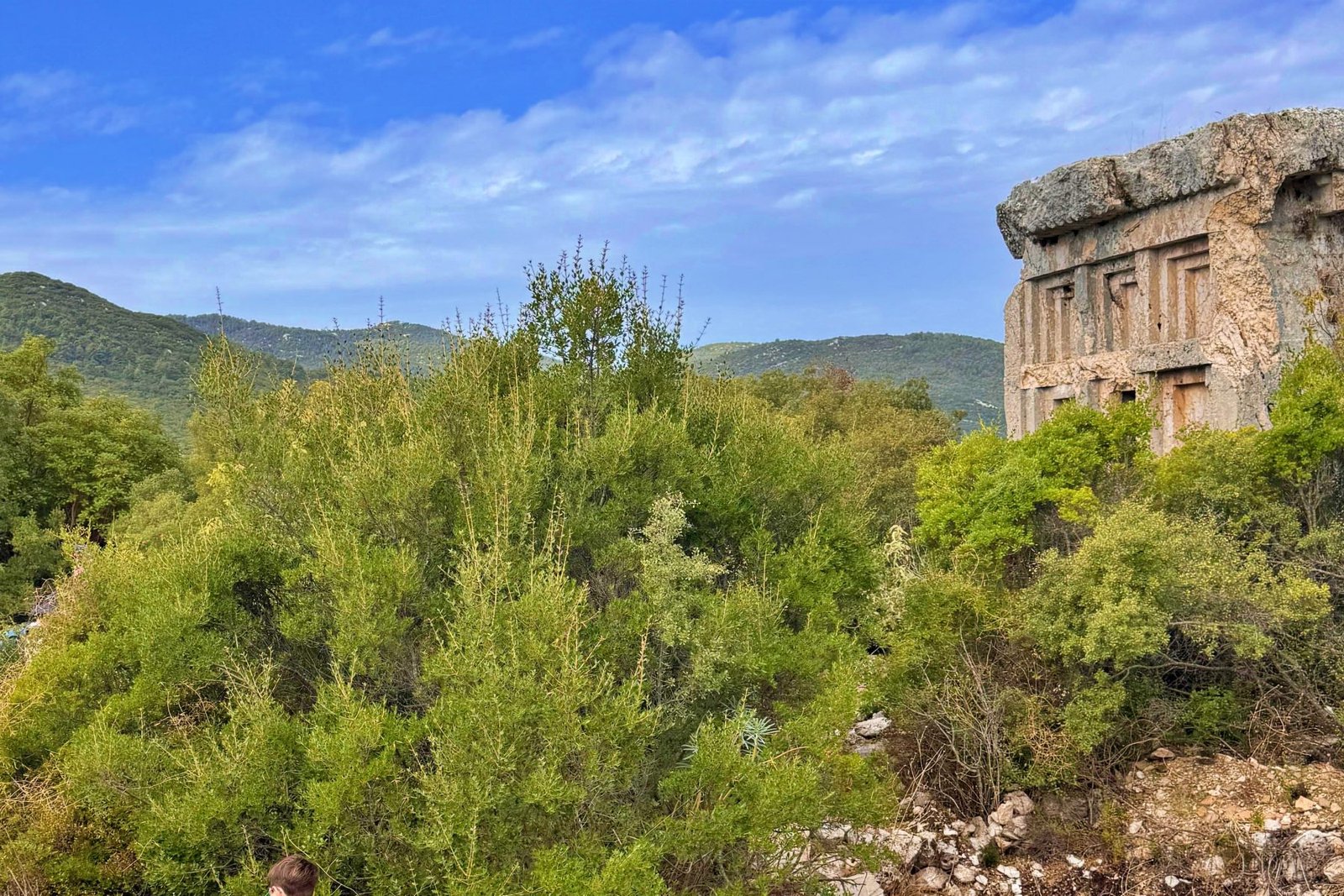
Perched on a dominant hill at the foot of Mount Felen, northeast of Kaş, Phellos is one of the best-preserved examples of Lycian stone architecture and defensive character. Its name, derived from the Greek word for “stony place,” was known as Vehinda in the Lycian language.
A Tale of Two Cities: Phellos and Antiphellos Standing silently and powerfully today, Phellos is the sister city to Kaş’s harbor settlement, Antiphellos. In the 4th century BC, Phellos was a major center, eventually yielding its prominence to its port, Antiphellos, during the Hellenistic period.
What Makes Phellos Unique?
- The Defensive Fortress: More than a sprawling city, Phellos resembles a military stronghold. Its 550-meter-long walls showcase exquisite polygonal stonework.
- The House-Type Rock Tomb: On the western edge of the acropolis, you’ll find a rare rock-cut tomb that mirrors Lycian wooden house architecture—a true masterpiece of ancient craftsmanship.
- The Famous Phellos Sarcophagus: Dating back to 385–350 BC, this limestone tomb is adorned with detailed reliefs of warriors, griffins, and the deceased holding a goblet at a banquet.
UNESCO Heritage Potential Phellos is currently on the UNESCO World Heritage Tentative List as part of the “Ancient Cities of Lycian Civilization.” With its untouched landscape and mystical atmosphere, it is a must-visit for those seeking the soul of ancient Lycia.
