
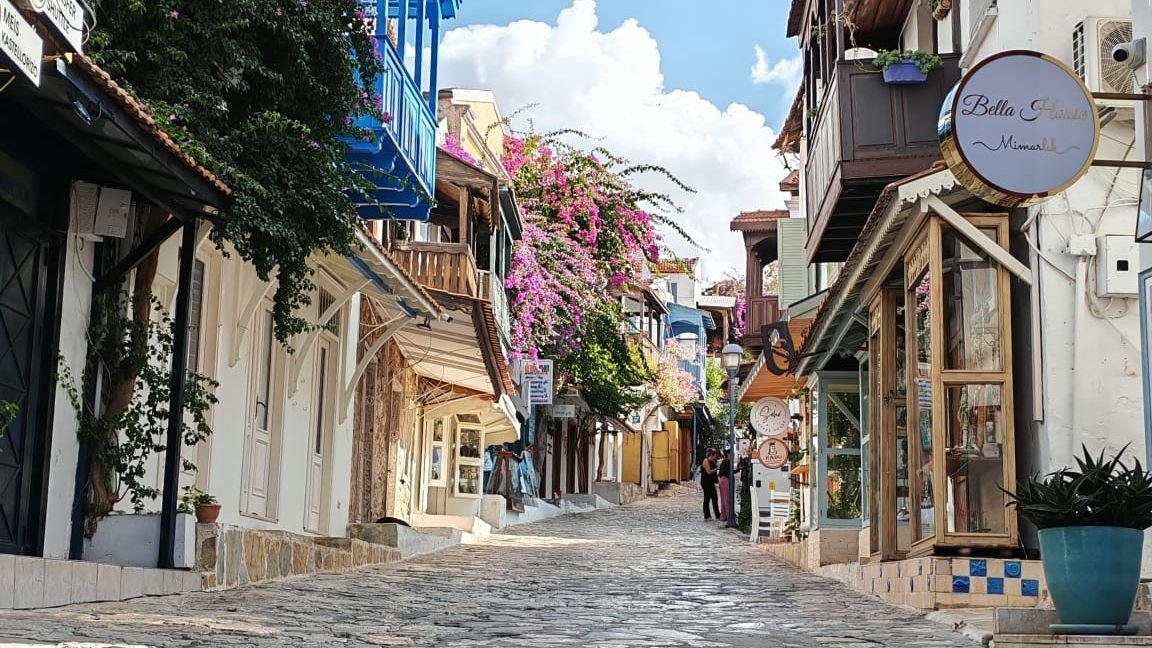
In the very heart of Uzun Çarşı (Long Bazaar), amidst the flow of daily life, stands the King’s Tomb—one of the most striking historical symbols of Kaş. Encountering such a majestic monument between colorful shops and bustling cafes is a surprising experience that defines the soul of Kaş: here, history isn’t tucked away in a museum; it stands right in the center of life.
History Carved in Stone: Dating back to the 4th century BC, this monumental sarcophagus is carved from a single block of rock. Belonging to the Lycian period, it is believed to have been built for a high-ranking nobleman or a ruler.
- The Inscriptions: An 8-line Lycian inscription on the base provides clues about the period’s beliefs.
- The Figures: On the front, you can see a male figure holding a staff alongside a sorrowful female figure.
- The Lions: The upper part features two prominent lion heads, symbolizing power and protection, which is why it is often called the “Lion Sarcophagus.”
A Living Heritage: The King’s Tomb is more than just a ruin; it is a landmark where people gather at sunset to take photos and soak in the atmosphere. Spending a few minutes admiring this masterpiece while walking through the bazaar is the easiest and most moving way to touch the ancient roots of Kaş.
